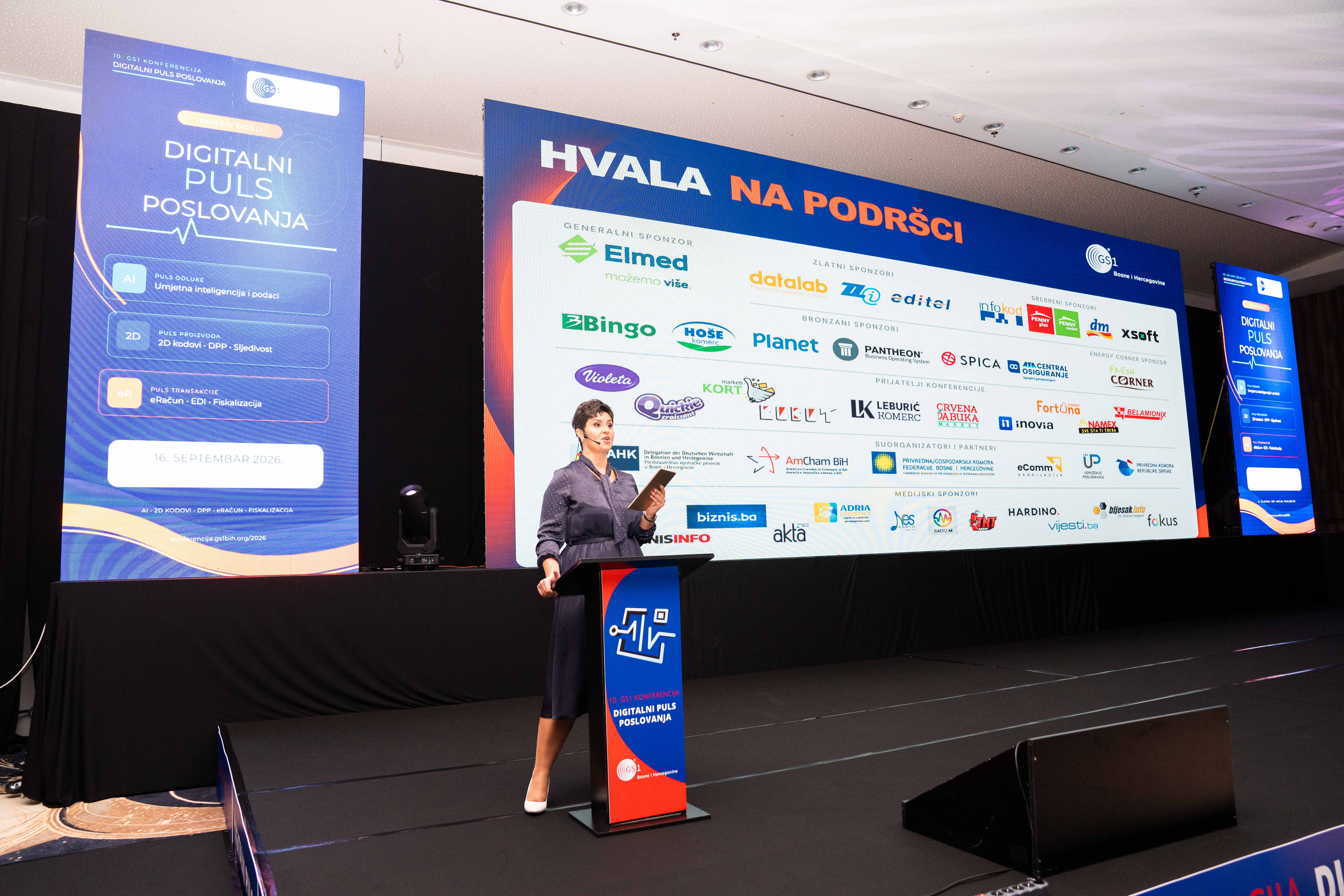






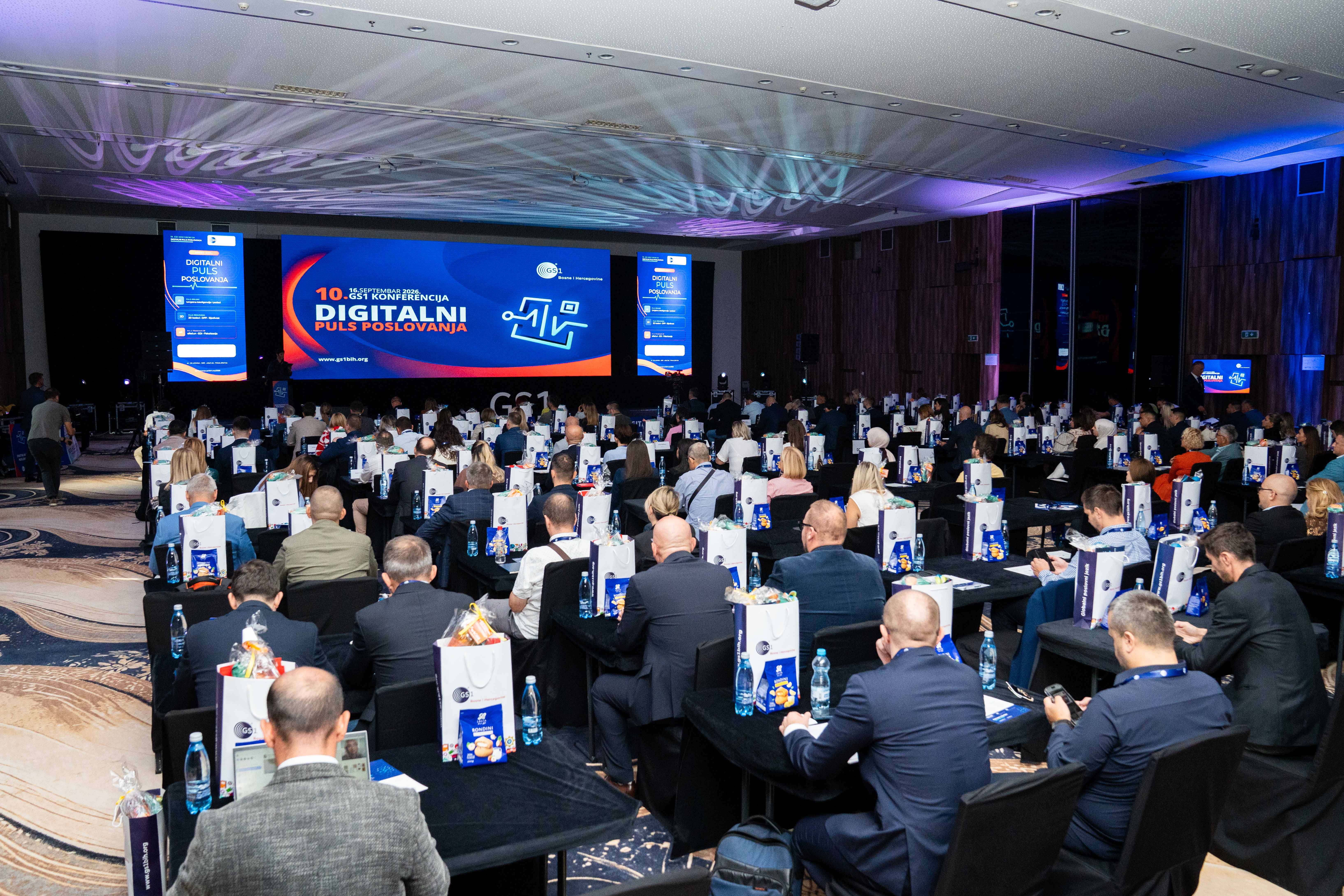
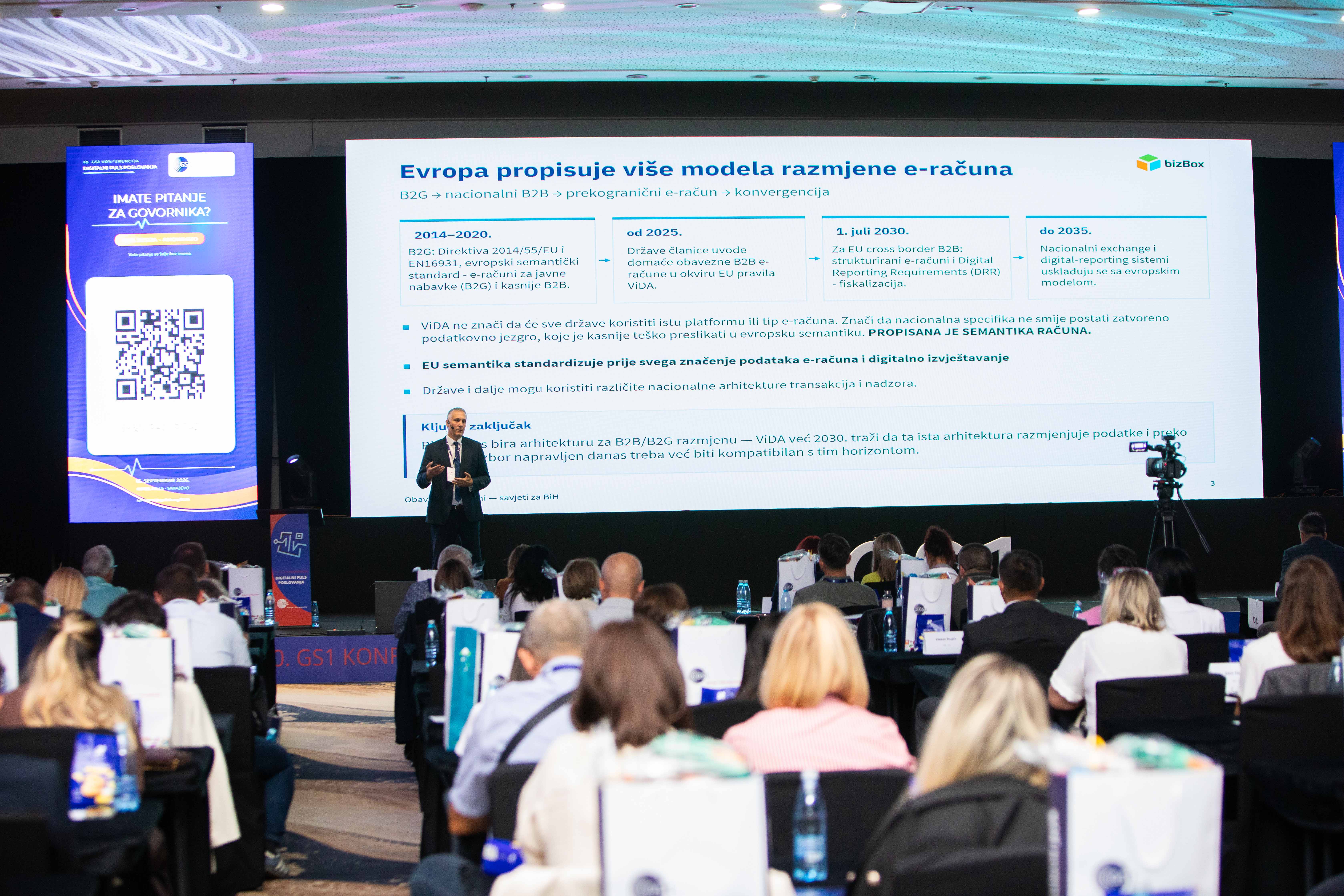
Implementing artificial intelligence, e-invoicing, or new product identification systems is not merely a technological decision. For companies, it simultaneously becomes a matter of managing data, investments, risks, responsibilities, and business processes. This very multidisciplinary approach defined the 10th GS1 Conference, "The Digital Pulse of Business," held on September 16, 2026, in Sarajevo, which brought together 186 participants from companies, institutions, and the business community.
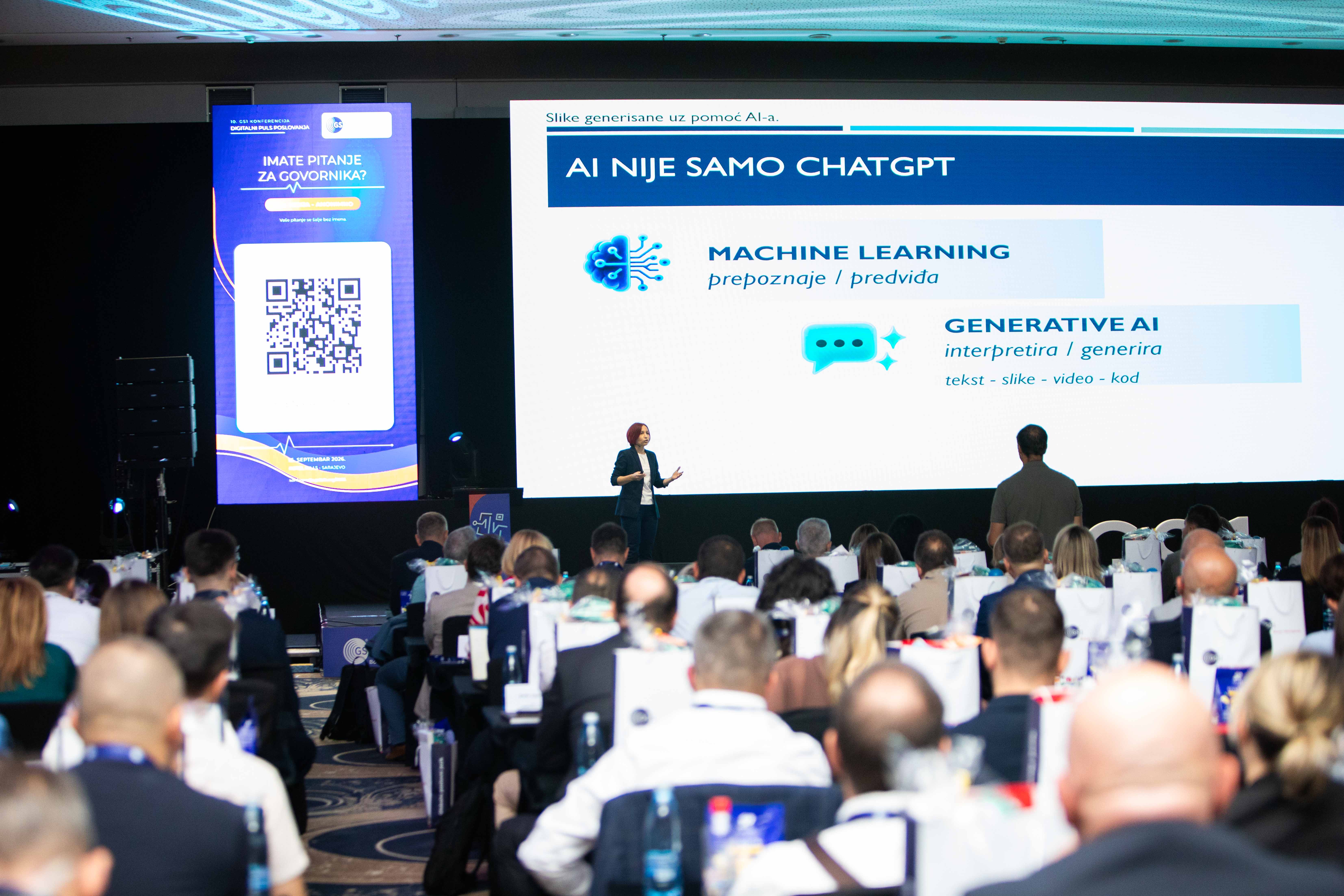
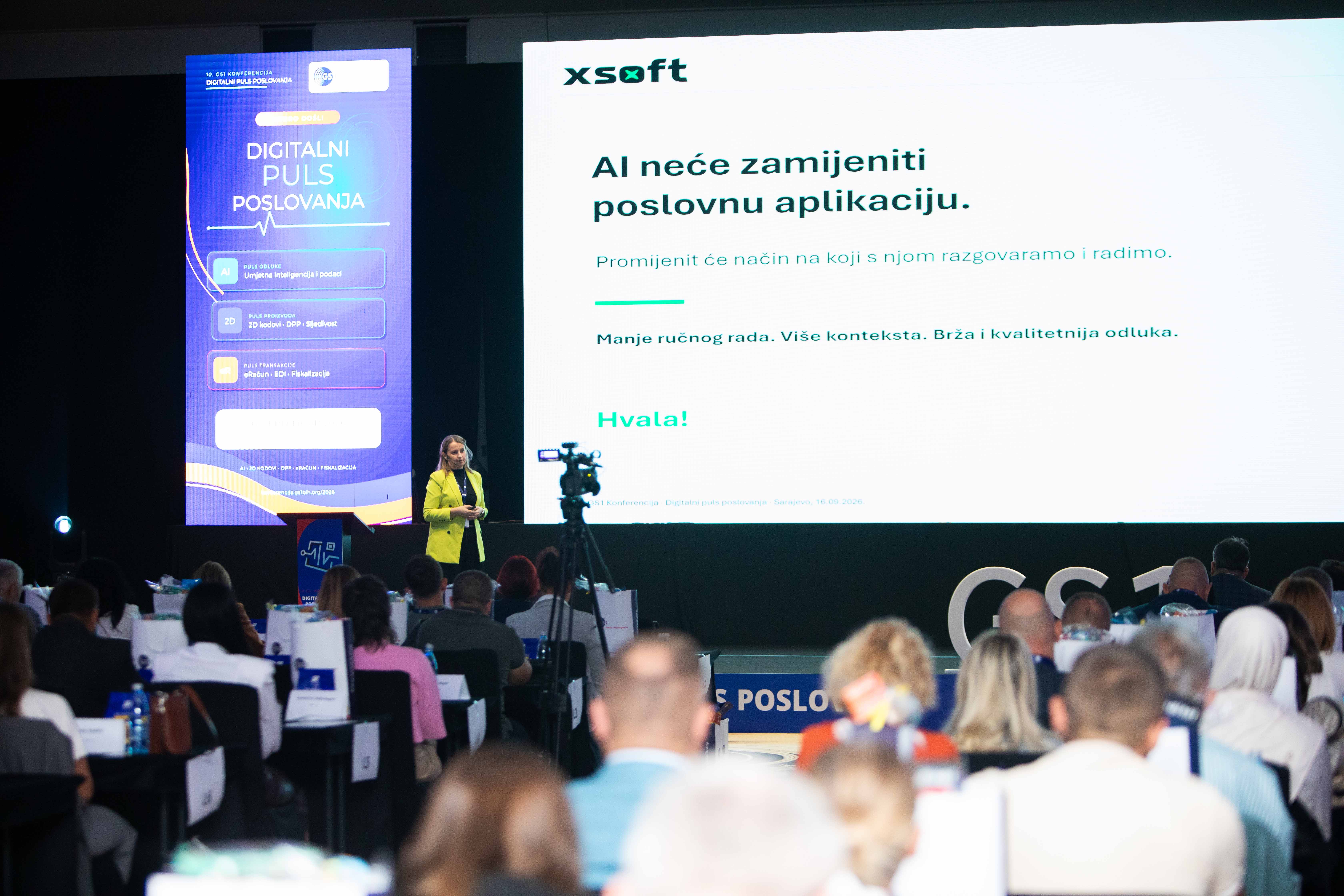
In the segment of the program dedicated to artificial intelligence, Zenina Dedić, Managing Director of Digital Hub GmbH, presented concrete examples of AI and robotics applications in the retail environment, while Josipa Kuna, COO of XSOFT, demonstrated how AI is becoming an integral part of ERP, CRM, and other business applications. The message conveyed by both presentations was that the value of AI depends not only on the algorithm but also on data quality, clearly defined business processes, and the way the new technology is integrated into the existing organization.
Digitalization as a business decision, not just an IT one
This same message was echoed in the program segment dedicated to fiscalization and e-invoicing. Adi Turković, Director of GS1 Bosnia and Herzegovina, and Raisa Ratković, CFO of INA Group, discussed the practical implications of the new Law on Transaction Fiscalization in the Federation of BiH—ranging from costs and system adjustments to organizational responsibility and the need to leverage this regulatory change as an opportunity for process automation.
European experiences were presented by Igor Zorko from the Chamber of Commerce and Industry of Slovenia, who emphasized that mandatory e-invoicing requires interoperability, standardization, secure data exchange, and high-quality data. Datalab BH and EDITEL further demonstrated how linking ERP and EDI systems enables the automated flow of orders, dispatch notes, invoices, and other business documents, eliminating the need for repeated manual entry of the same information.
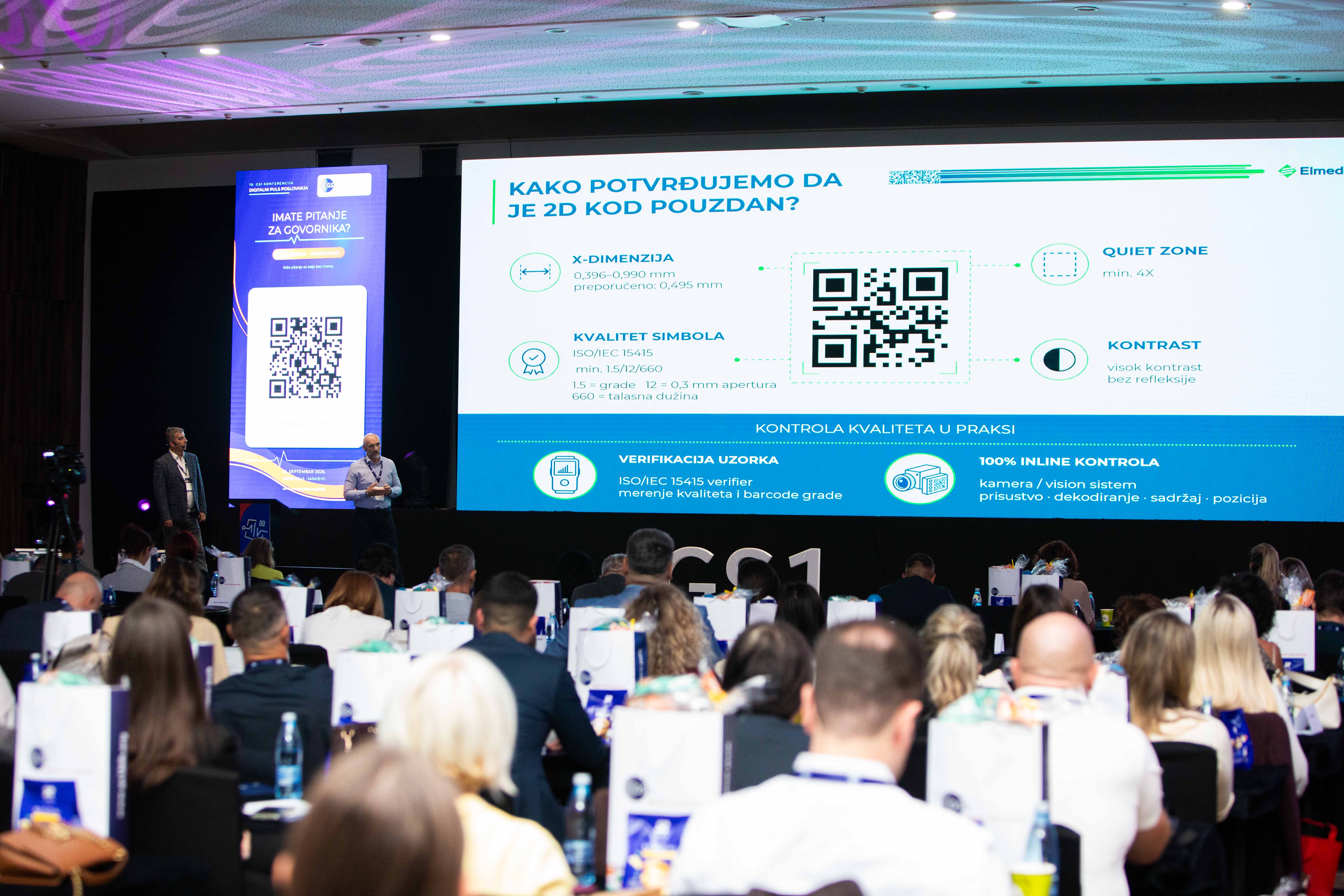
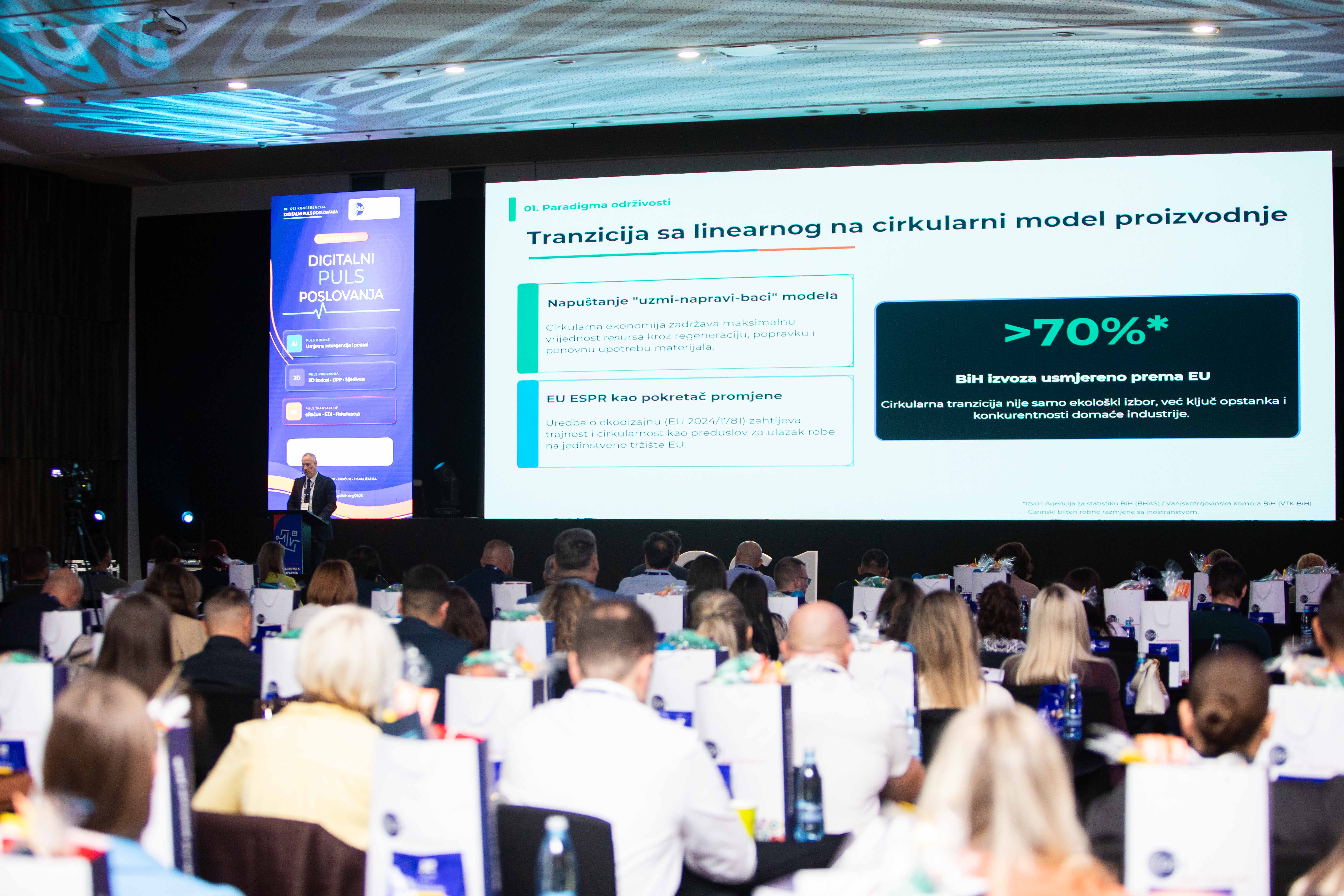
The conference also addressed the topics of Digital Product Passports (DPP) and 2D codes, which link regulatory requirements with the management of production and supply chain data. Ismar Ćeremida from UNDP BiH discussed the circular economy and the future of sustainable products, while Tamara Đurić from Magbago used a concrete example to show that companies must begin collecting the data required for DPPs well before the obligation itself becomes imminent.
Experts from ELMED presented the practical implementation of 2D codes, and participants were able to see the technology in action on a production line set up within the conference venue. The demonstration showed how the physical product, identification code, LOT number, and business data are integrated into a single technological process.
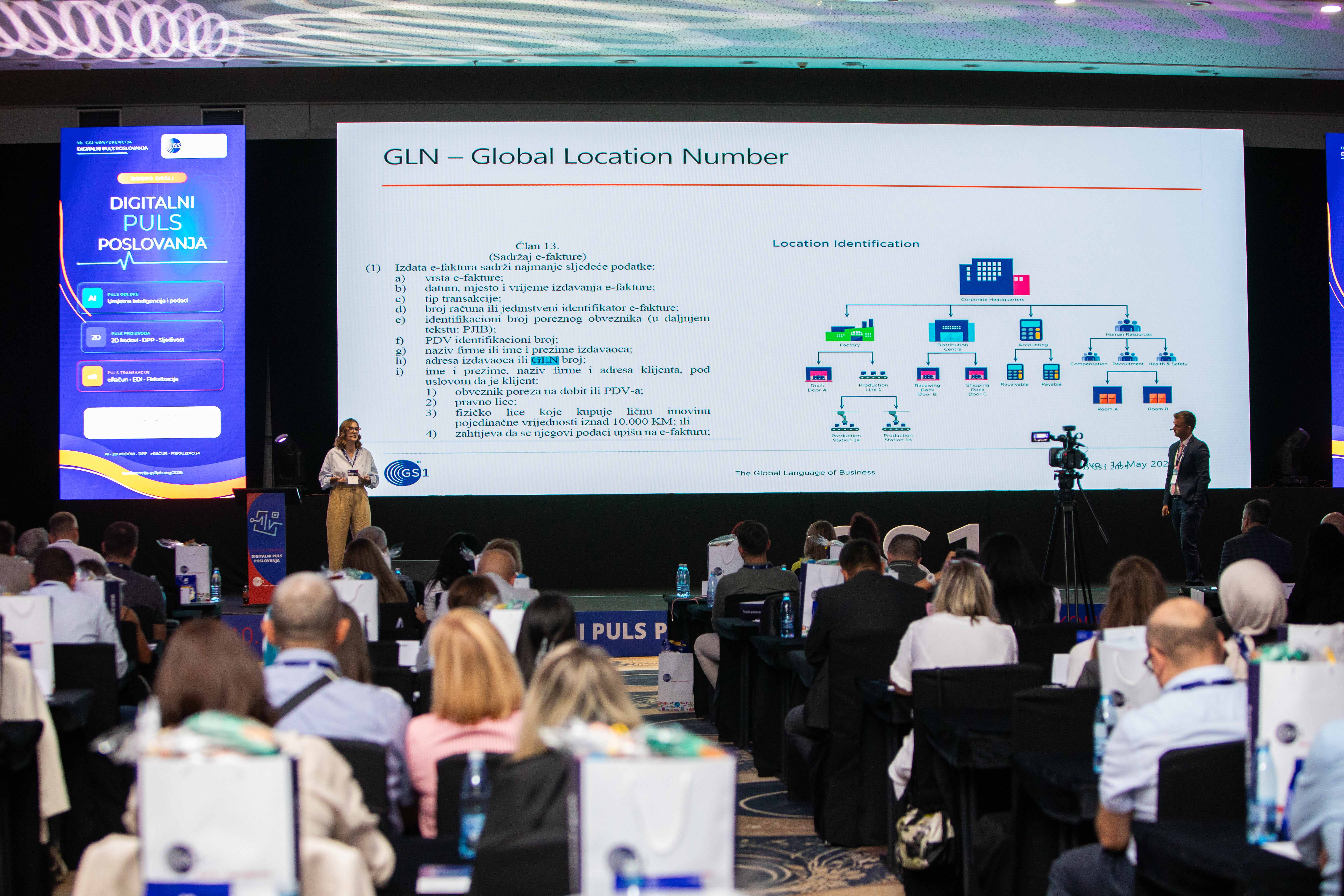
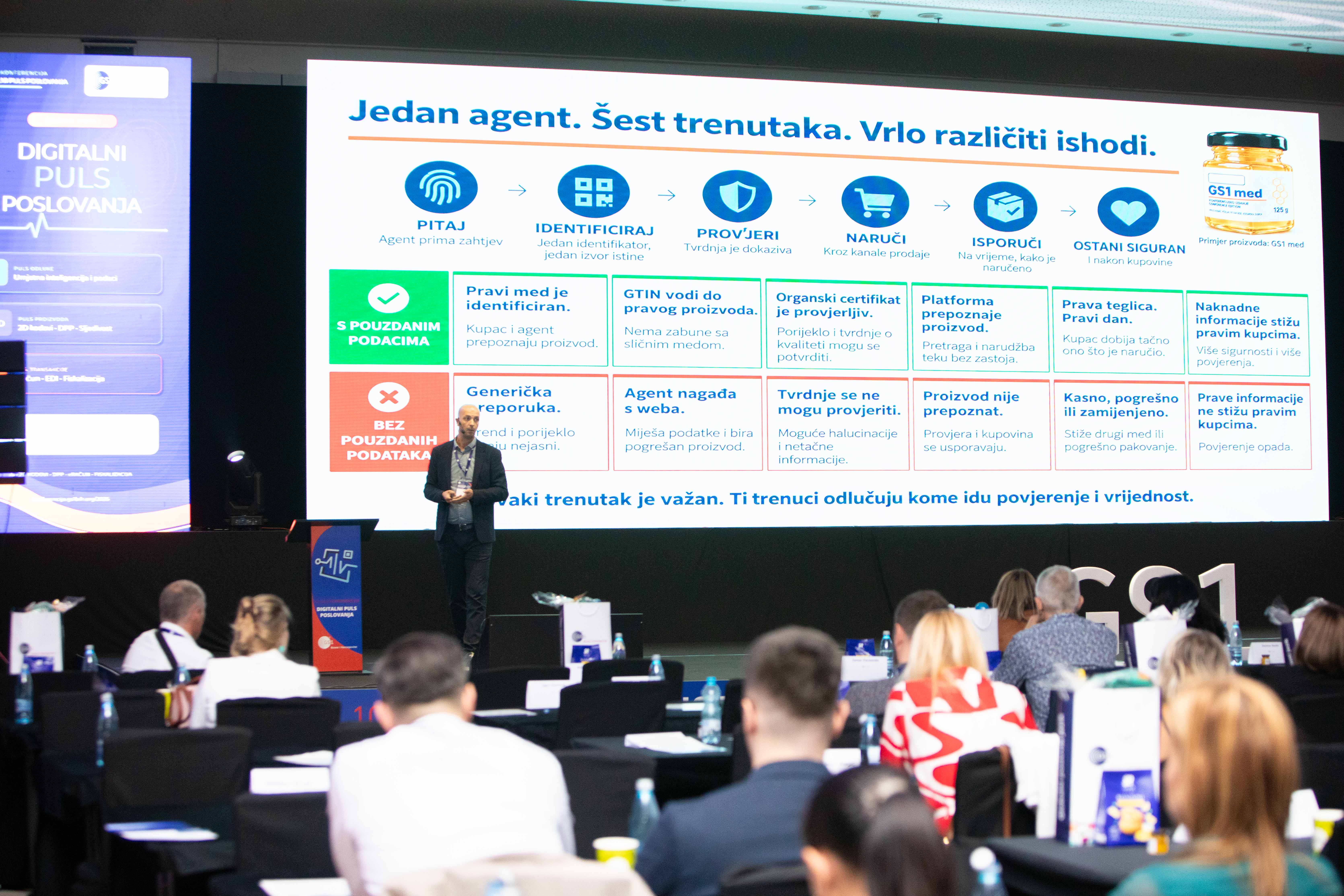
Haris Poturković from GS1 Bosnia and Herzegovina concluded the program by addressing the future of data in an AI-driven world, focusing specifically on GTIN, GS1 Digital Link, and the availability of structured data to future AI systems and agents. In an environment where machines increasingly search for and interpret data on behalf of users, reliable product identification is becoming a crucial element of digital competitiveness.
The conference's collective conclusion was that digital projects should be viewed through the lens of clear business objectives, data quality, the integration of existing systems, risk assessment, and the tangible value the change is intended to bring to the organization. GS1 Bosnia and Herzegovina thanks AmCham BiH for its partnership on the milestone 10th GS1 Conference and for its support in addressing topics that link digital transformation to competitiveness, management, and the long-term growth of companies.