




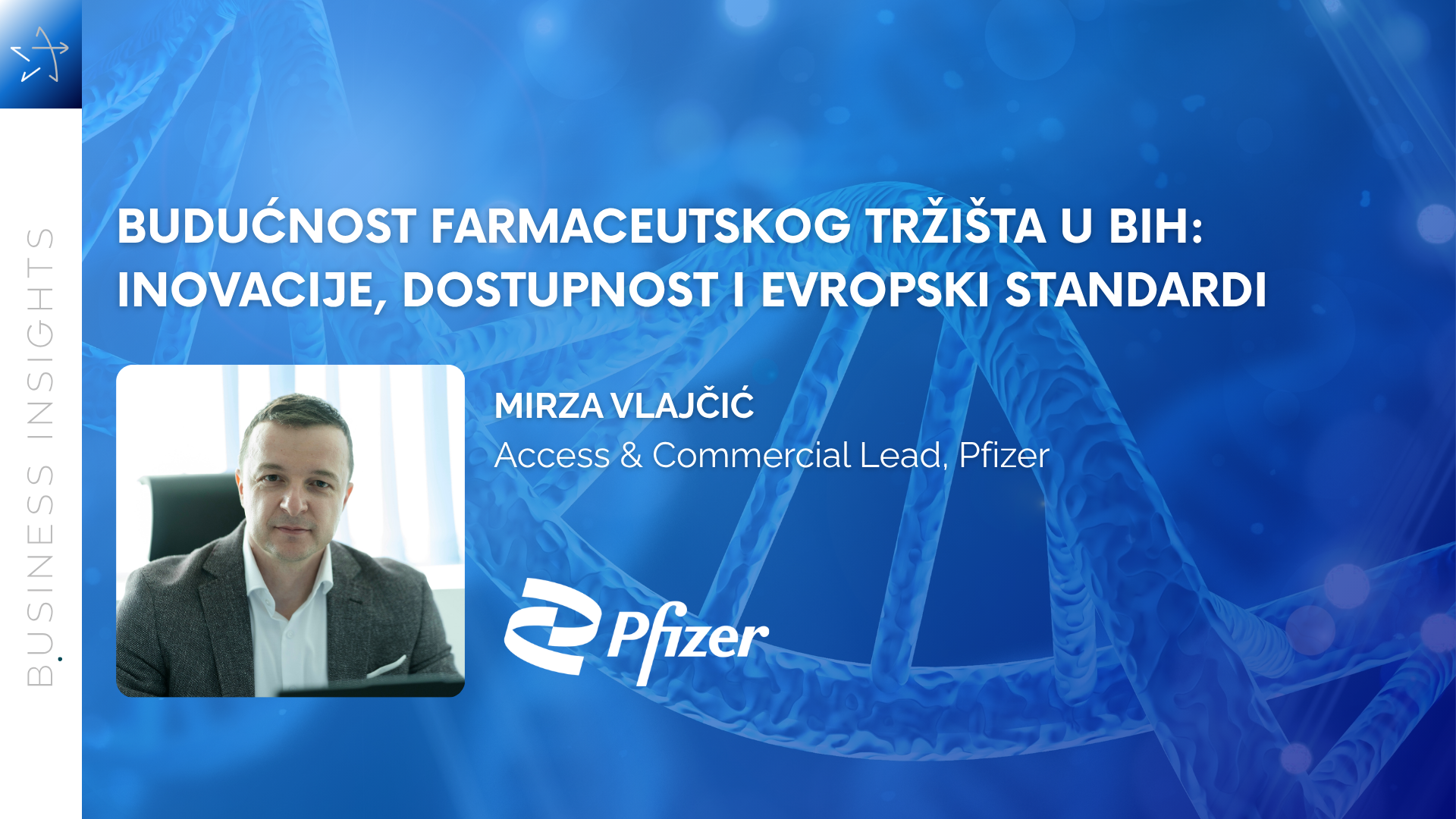
The pharmaceutical market in Bosnia and Herzegovina is undergoing a series of changes – what trends are currently having the most significant impact on its shaping?
The pharmaceutical market in Bosnia and Herzegovina operates within a complex and fragmented healthcare system, which is directly reflected in the speed and manner of availability of modern therapies. It is in this context that current trends become more clearly understandable.
Recently, a number of important developments have been visible: strengthening the regulatory framework, growing importance of innovative therapies, increasing focus on treatment outcomes as a basis for decision-making, but also a more active role of patients in healthcare processes.
It is important to look at the bigger picture. The process of approaching the European Union involves gradual harmonization of regulatory practices and clearer rules, which in the long term can contribute to a more stable and predictable environment – both for the healthcare system and for responsible business and investment in innovation.
In the context of the increasing focus on innovative therapies, how is the approach to treatment and patient expectations changing in our market?
The development of innovative therapies, including biological medicines, advanced therapies and therapies for rare diseases, is significantly changing the way we think about treatment today. The focus is increasingly shifting from symptom management to long-term outcomes, quality of life and the possibility of achieving more lasting therapeutic results.
At the same time, patients are today more informed and engaged than before. They are increasingly monitoring the therapeutic options available in Europe and the world, connecting through patient associations and participating more actively in the dialogue on health policies. Such a development contributes to a more constructive discussion about the priorities of the health system and raising awareness of the importance of timely and equal access to modern therapies.
The availability of modern therapeutic solutions often depends on several factors - where do you see the key challenges in their introduction and implementation in BiH?
The key challenges in Bosnia and Herzegovina primarily stem from the limited financial capacities of the health system and complex decision-making processes. This is particularly pronounced when it comes to highly innovative and often expensive therapies, especially in the field of rare diseases.
Traditional financing models are increasingly difficult to match therapies that involve high initial costs, which is why there is increasing talk of new, more flexible approaches. These include payment models in installments, payments based on achieved treatment outcomes, as well as other arrangements that link the price of therapy to its real effects in practice. At the same time, there is an evident need for more stable and additional sources of financing, such as special funds or clearly defined budget lines for rare diseases.
That is why it is becoming increasingly important to further develop mechanisms that are already present in European practice, such as risk-sharing agreements (MEAs), and to strengthen HTA (Health Technology Assessment) frameworks and pharmacoeconomic processes to support transparent and sustainable decision-making.
Looking ahead, what changes or developments do you see as the most likely for the pharmaceutical market in the next few years?
In the coming years, the pharmaceutical market will be increasingly shaped by global trends – further industry consolidation, the accelerated arrival of advanced therapies and the wider application of digital solutions in healthcare. Digital tools and smarter use of health data will contribute to better monitoring of treatment outcomes and more efficient management of therapies in everyday practice.
In Bosnia and Herzegovina, one of the most significant developments would be the establishment of more stable, clearer and more predictable institutional and regulatory frameworks. Such an environment would enable earlier and more consistent introduction of innovations, but in a financially sustainable manner. The process of European integration is long-term, but it can bring very concrete benefits: harmonization of standards, clearer procedures and gradually better availability of modern therapies, which ultimately has a positive impact on the quality of healthcare and the overall sustainability of the healthcare system.