






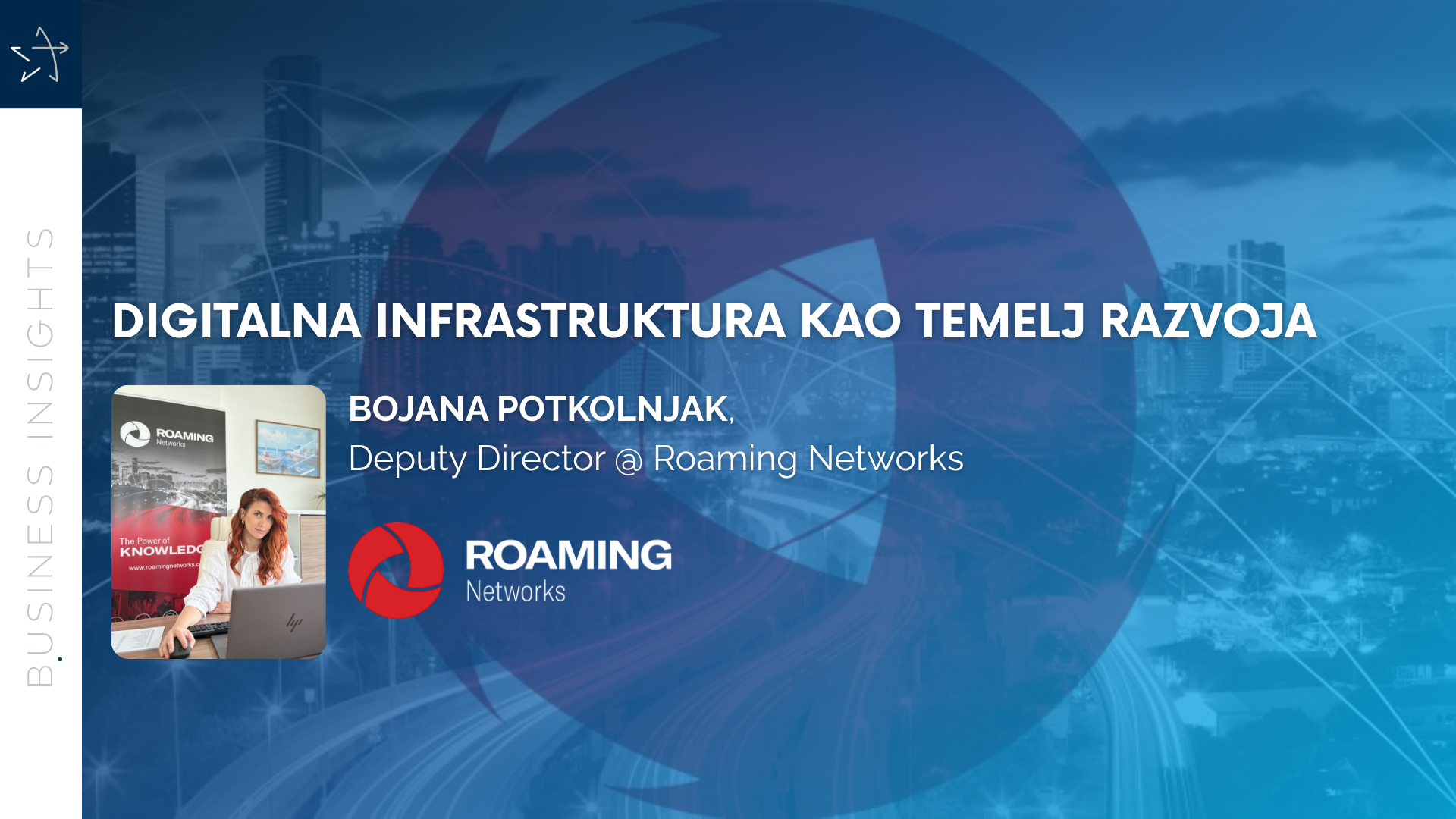
Digital infrastructure has become a defining factor of economic development. In Bosnia and Herzegovina, where digital transformation remains uneven, companies like Roaming Networks play a critical role in bridging the gap between market needs and modern technology.
According to Bojana Potkolnjak, the company operates as one of the leading regional system integrators in telecommunications and IT infrastructure. “Our impact in Bosnia and Herzegovina is most visible through projects focused on network modernization, fiber infrastructure development, and the implementation of advanced digital systems,” she explains.
Current projects are closely tied to strengthening the country’s digital backbone. “We are working on modernizing mobile networks for operators such as BH Telecom and M:tel, expanding fiber networks, developing IP and transport systems, and implementing specialized solutions, including aviation navigation systems,” Potkolnjak notes.
Despite these efforts, the market still faces uneven digital maturity. While some sectors are advancing, a large portion of the business community remains in early stages of digitalization. “The current level of digital maturity is improving, but still below that of more developed European markets,” she says.
The key challenge lies in the gap between business needs and existing infrastructure, as well as limited institutional integration. “Many institutions are not sufficiently connected, and processes still rely heavily on physical documentation,” she adds, pointing to the need for stronger investment, better coordination, and clearer regulatory frameworks.
To meet increasing demand for reliable connectivity, the company continues to invest and build partnerships. “We respond to these needs through network optimization and long-term, sustainable solutions,” she explains.
Looking ahead, significant progress is expected, but not without challenges. “Over the next five years, we expect strong growth in fiber networks, 5G deployment, and cloud solutions. However, implementation speed, regulatory alignment, and workforce shortages remain key challenges,” Potkolnjak emphasizes. She adds that without stronger coordination between the private sector and public institutions, progress will remain limited.
The private sector, she believes, will play a decisive role. “Its strength lies in investments, innovation, and partnerships that can accelerate digital transformation,” she notes.
From experience, the most effective approach combines infrastructure investment with collaboration. “Projects that include international connectivity, network optimization, and knowledge exchange deliver the most sustainable results,” she says.
Leading a company in such a dynamic sector requires constant adaptability. “It’s exciting, but it demands agility, strategic thinking, and continuous learning,” Potkolnjak explains. She highlights vision, decision-making, and trust in the team as essential leadership qualities.
On a personal level, her motivation comes from continuous growth. “What drives me most is learning and the feeling that you are contributing to progress that society truly needs. It won't be easy in an ever-changing environment, but it's sure to never be boring,” she concludes.