






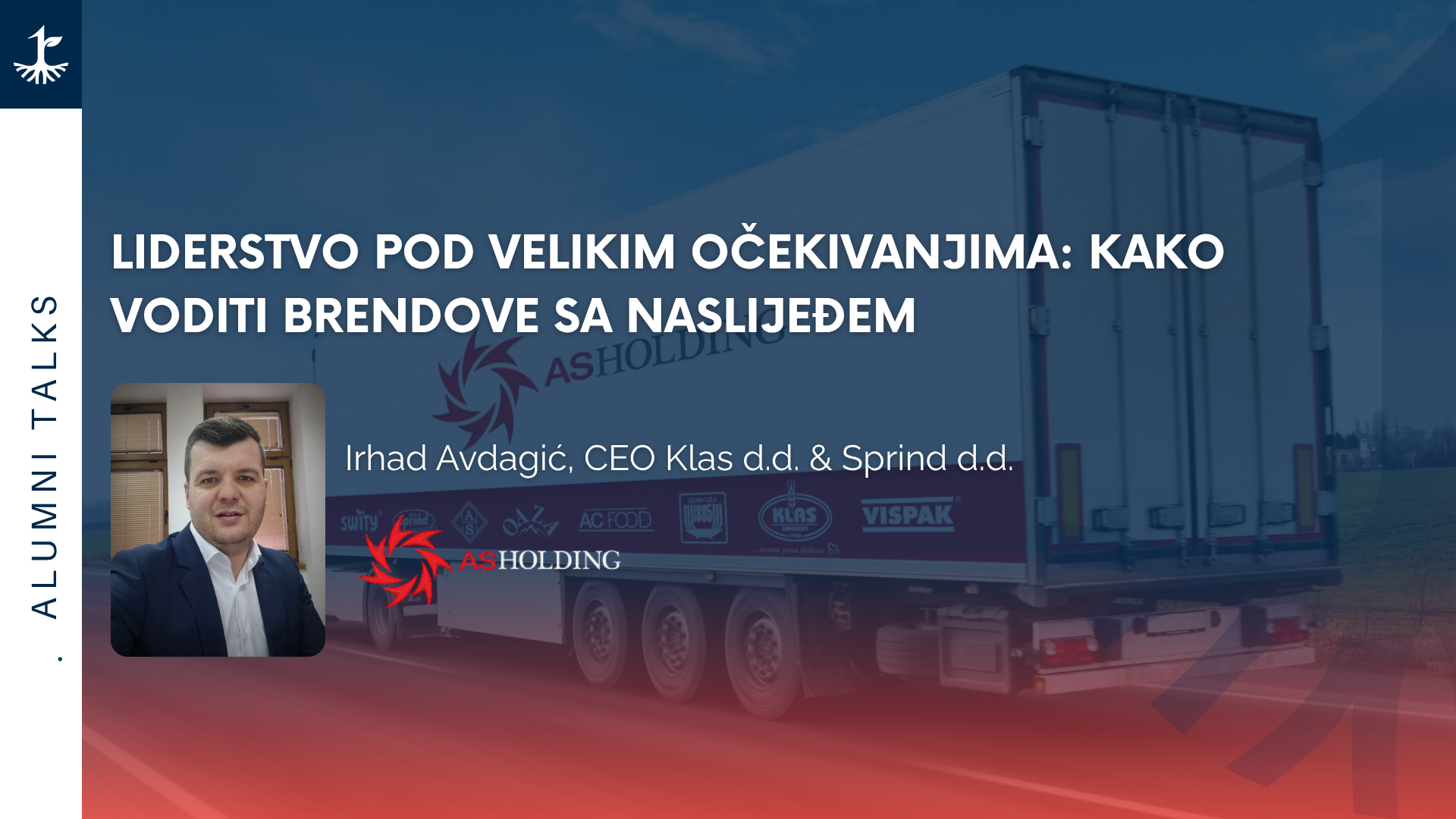
In our conversation with Irhad Avdagić, recently appointed CEO of Klas and Sprind, we explored the challenges of stepping into a leadership role, managing brands with strong societal significance, and balancing tradition with innovation.
Reflecting on his transition, Avdagić emphasizes that the challenge cannot be reduced to a single dimension.
“The biggest challenge in the transition is the balance between high expectations and the need to make long-term and sustainable decisions,” he explains. Responsibility, as he sees it, extends beyond formal leadership: “Responsibility towards employees, brands, and the market is great, but I believe that a leader must maintain calm and clarity of focus.” While speed is often expected, he draws a clear distinction: “The pace of decisions is important, but it is even more important that decisions are based on data and experience.”
Leading companies whose brands are deeply embedded in society brings an additional layer of complexity.
“Leading a company whose brands are part of the identity of a society means having an additional dimension of responsibility,” Avdagić notes. In such a context, decisions go beyond business logic: “Decisions are then not only business – they are also emotional because they affect consumer trust that has been built over decades.” This is why change requires careful consideration: “Every change must be carefully planned, with respect for tradition, but also a clear orientation towards the future and modern consumer habits.”
Looking ahead, he clearly defines the priorities for the next phase.
“The strategic focus will be on strengthening the market position through innovation and expanding distribution, while preserving the quality that is the foundation of the Klas and Sprind brand,” he states. Operationally, the focus is on improvement: “Operationally, the priority is process optimization, digitalization and increasing production efficiency.” However, he stresses that people remain central: “I consider investing in employee development and strengthening organizational culture to be key – because without a motivated and competent team, there is no long-term success.”
When it comes to balancing tradition and innovation, Avdagić draws a clear line between what must be preserved and what must evolve.
“Tradition is preserved without compromise when it comes to product quality, recipes and core brand values. This is the foundation of trust,” he explains. At the same time, modernization is essential: “Modernization is necessary in processes, packaging, communication with consumers and distribution. The market is changing, and innovations allow tradition to remain relevant for new generations.”
Reflecting on his experience within AS Group, Avdagić highlights the foundations of his leadership approach.
“Working in the AS Group taught me the speed of adaptation, discipline and the importance of teamwork,” he says, emphasizing the values that shaped him: “I would especially highlight the culture of responsibility and focus on results.” These lessons continue to guide his decisions today: “I use that experience today in making decisions that must be both courageous and sustainable.”