


Market Integrity: A Shared Responsibility of the Public and Private Sectors
We often talk about the need to establish a compliance function and adequate programs in business entities, not only to comply with external regulations, but also to ensure consistent behavior in accordance with internal rules and set values.
In Bosnia and Herzegovina, entities from the financial sector, such as banks and insurance companies, have a legal obligation to establish this function and develop compliance programs. On the other hand, in Croatia, we see an example of how the state recognizes the importance of ethical and fair business practices in the public sector as well, and the Government of the Republic of Croatia adopted a Decision on the introduction of a compliance function in legal entities with majority state ownership.
However, leaving aside the regulations that oblige individual sectors - a broader question arises: how does the operation of the public sector in BiH affect all business entities, regardless of industry or size, and can the joint action of the private and public sectors improve market integrity, legal certainty and trust?
In communication with companies, we often hear that they exclude themselves from public procurement procedures because they do not want to spend resources on preparing tenders that they know in advance will not be accepted. Everyone is familiar with "unwritten" agreements between bidders, they often point out the denial of rights in administrative procedures, and appeal mechanisms are considered a formality - because second-instance bodies most often confirm first-instance decisions. Business entities often give up on legal protection because court processes last for years, and during that time they have to operate and survive on the market. On the other hand, it is no secret that there are also companies that consciously violate the rules, ignoring the public interest and the quality of the delivered product or service, which ultimately affects the citizens of BiH the most.
It is in the interest of all citizens of BiH that public funds are spent transparently and responsibly, and that maximum quality is obtained for the available money. To achieve this, the public and private sectors should work through partnerships to:
- strengthen the transparency of public processes,
- improve the knowledge and competencies of public officials participating in control and oversight activities,
- raise awareness – in both the private and public sectors – about the harmful effects of corruption, fraud and distortion of competition, as well as about mechanisms for reporting and preventing irregularities,
- establish joint mechanisms for controlling key processes, such as Integrity Pacts.
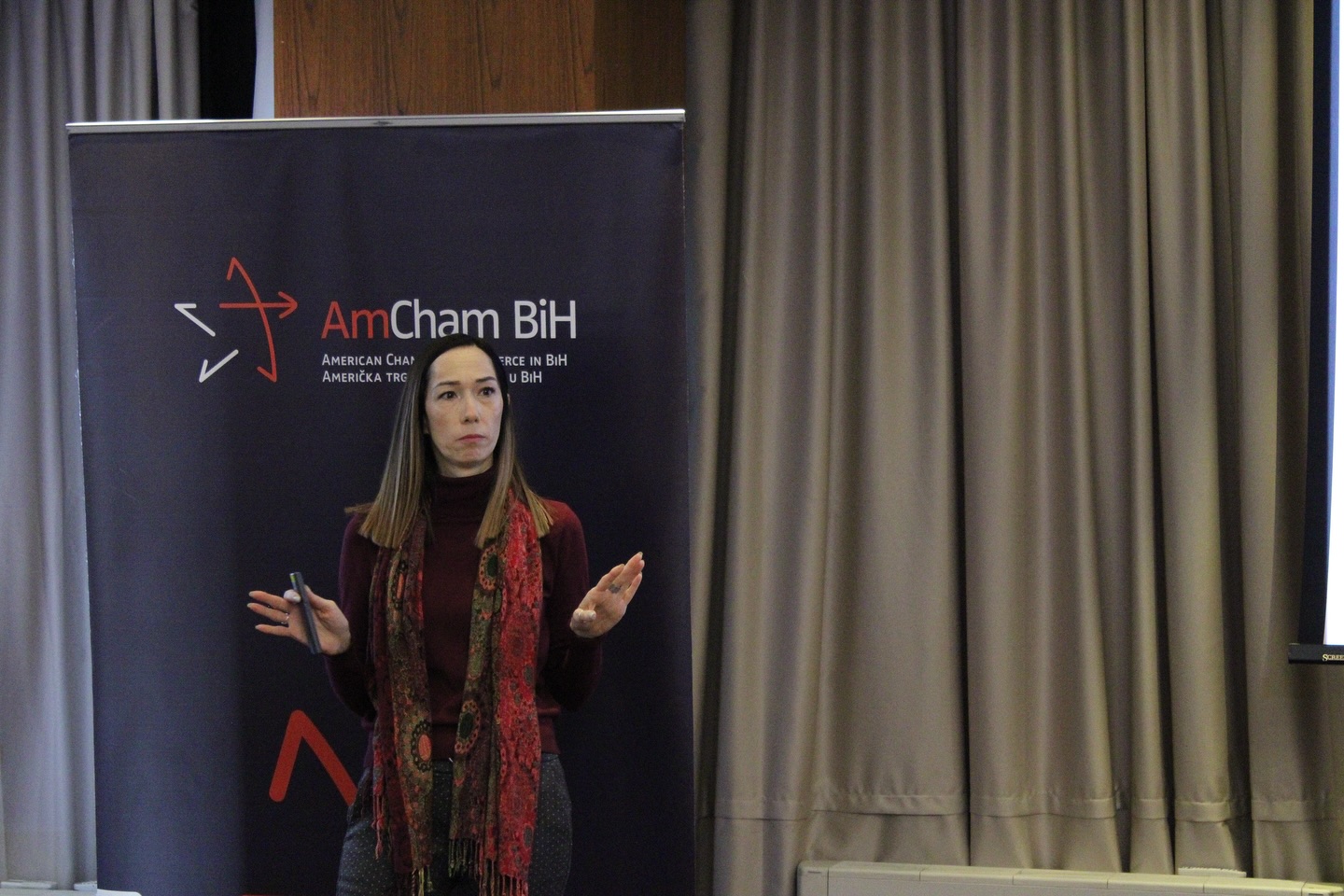
For these reasons, the AmCham BiH Ethics and Compliance Committee strives to establish cooperation with key public institutions and, as a representative of the business community, contribute to the overall integrity of the market by strengthening fair competition, improving integrity in public procurement, promoting initiatives such as the establishment of a Business Ombudsman in BiH, and other activities that support the establishment of a predictable and fair business environment.
In cooperation with the Competition Council of BiH, we are planning to organize an event that will contribute to a better understanding of the problems of prohibited agreements and distortions of market competition, and to clarify the mechanisms available to tender participants, as well as the role of the Council in resolving these problems. In the current conditions on the BiH market, where there is no complete legal certainty or effective legal protection mechanisms, a joint initiative is necessary to create a safer, more stable and fairer business environment. This also includes stricter sanctions for all those who violate the rules, because only in this way can society ensure that it gets the best possible value for public money, with full respect for laws and regulations.