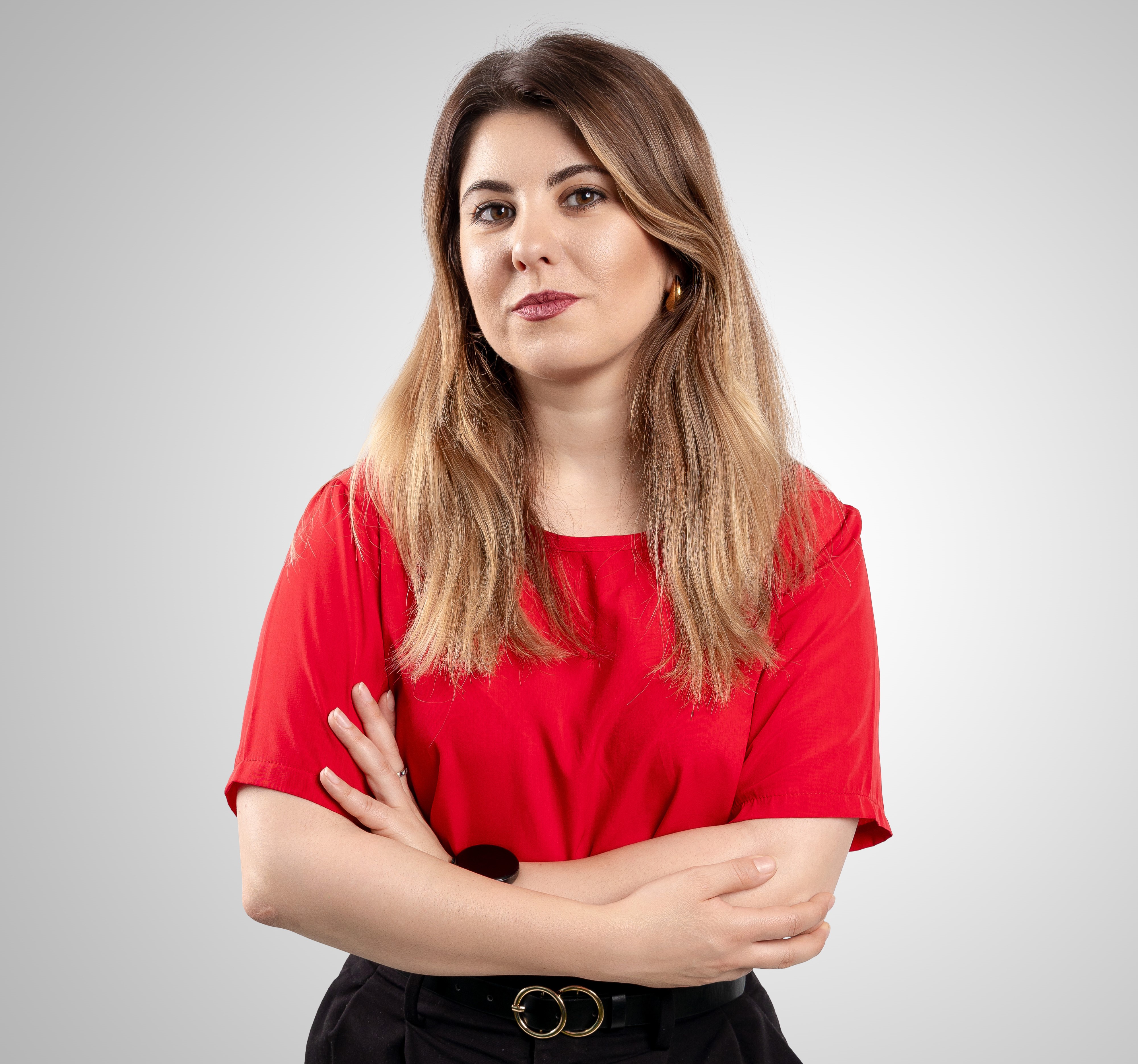







You went through the Leader Roots program as a participant, and now you are part of the Alumni group. How do you view the importance of such educational initiatives for the personal and professional development of young leaders in BiH today?
Programs like Leader Roots are valuable because they offer young professionals a space to exchange experiences, introspection, and connect with leaders who work in different sectors. For me, it was a process of awareness, not only of my own potential, but also of the responsibility that leadership carries. It was especially important to me that the program also deals with personal values, because I believe that authentic leadership stems from these foundations. And as part of the Alumni community, I am glad that I can be a support to others who are going through the same process.
ZIRA Group, as part of its masterclass, decided to explore the topic of rebranding with the participants. Why did you decide on this topic and what do you think is crucial for rebranding to not just remain a visual change, but a real transformation of the values and position of the brand?
Rebranding is often understood as changing the logo or colors used in the visual identity, but in essence it is a much deeper process. Through its rebranding, ZIRA redefined who we are, how we do business and why we do what we do. That is precisely why we chose this topic – to show how important it is for each visual element to be grounded in the company's real values, the way we communicate and to carry a clear message to our target groups. The key is consistency so that what we communicate externally is a reflection of what we live internally. For us, rebranding was a long-term process, and we decided to present this story within the masterclass because, as a company that has been operating on the international market for almost 30 years, we saw the need to adapt to the needs of the market and modernize our way of presenting ourselves. Rebranding is actually an opportunity for a company to be honest with itself.
How do you stay true to the principle of continuous learning, and what habits or sources of knowledge are particularly important to you?
Learning has gotten under my skin, I have always been a nerd and curious to the point of boredom. I love podcasts – sometimes it’s something about marketing, sometimes it’s about human psychology or organizational systems, because I am fascinated by how people function together. I read a lot, but I learn most through practice – when my team and I go through challenges and rack our brains on how to communicate something better or set a strategy. And what I have learned over the years – I grow the most when I admit that I don’t know something. That opens up space for real learning.

What does responsible leadership mean to you and how can companies pass it on to younger generations?
To me, responsible leadership means not using power to “keep everything under control”, but knowing when to step back and give space to others. I have seen and experienced both styles – and I know which builds and which shuts people down. Responsible leadership means acting in accordance with values, even when it is not the easiest path. It means thinking long-term, considering the impact of decisions on people, the community and the wider system. Companies can lead by example – through managers who are willing to share knowledge, admit mistakes and give others space to grow. Authenticity, integrity and trust cannot be “learned” from a manual, they are acquired and lived in everyday situations.
ZIRA Group is known for its social contribution to the community. What would you highlight as a key message to companies that want to do more than formal social responsibility?
The greatest value comes when social engagement stems from the company's identity. At ZIRA, our contribution to the community is an extension of who we are, part of our vision to build a world in which the technology community creates better opportunities for the entire society. Whether we support educational initiatives or empower youth, we always ask ourselves: "How can we make a real, long-term difference?" The message to other companies would be to not only support projects and initiatives that "look good", but also those that resonate with their purpose and what the people working within that company would support.
Leadership today is no longer associated solely with a title, but with the ability to influence others and connect people around shared values. How have you built your leadership style through your roles and what motivates you most today?
My leadership style has evolved over time - from wanting to do everything myself, to understanding that true strength lies in trust, team empowerment and shared learning. It has always been important to me to foster an atmosphere where people feel seen, heard and have space to contribute. I have my own style which is a combination of strategic structure and open, human communication. I love it when people feel free to say “I don’t know” or “I have a crazy idea” because that’s where creativity comes from. What motivates me the most today is when I see that my work helps the team grow, that we communicate more clearly and that people outside recognize us not only for our products, but also for our culture. Then I see that what we do as a team makes sense – for our employees, for our clients, for the communities in which we operate.
Ambition often brings challenges, but also the strength to open new doors. When you look back on your professional journey, what was the turning point that taught you the most about yourself as a leader?
One of the key turning points was coming to ZIRA and taking on the responsibility of leading a team of 6 people, but also the entire communication and marketing process. That's when I realized that leadership doesn't come automatically with a title, but is built through relationships, through learning from mistakes, through setting healthy boundaries. That role taught me to be more patient, to listen more and not always to have all the answers. Sometimes asking the right question is enough. You don't become a leader when you are put in charge of people, but when you learn how to really listen to them and let them surprise you.